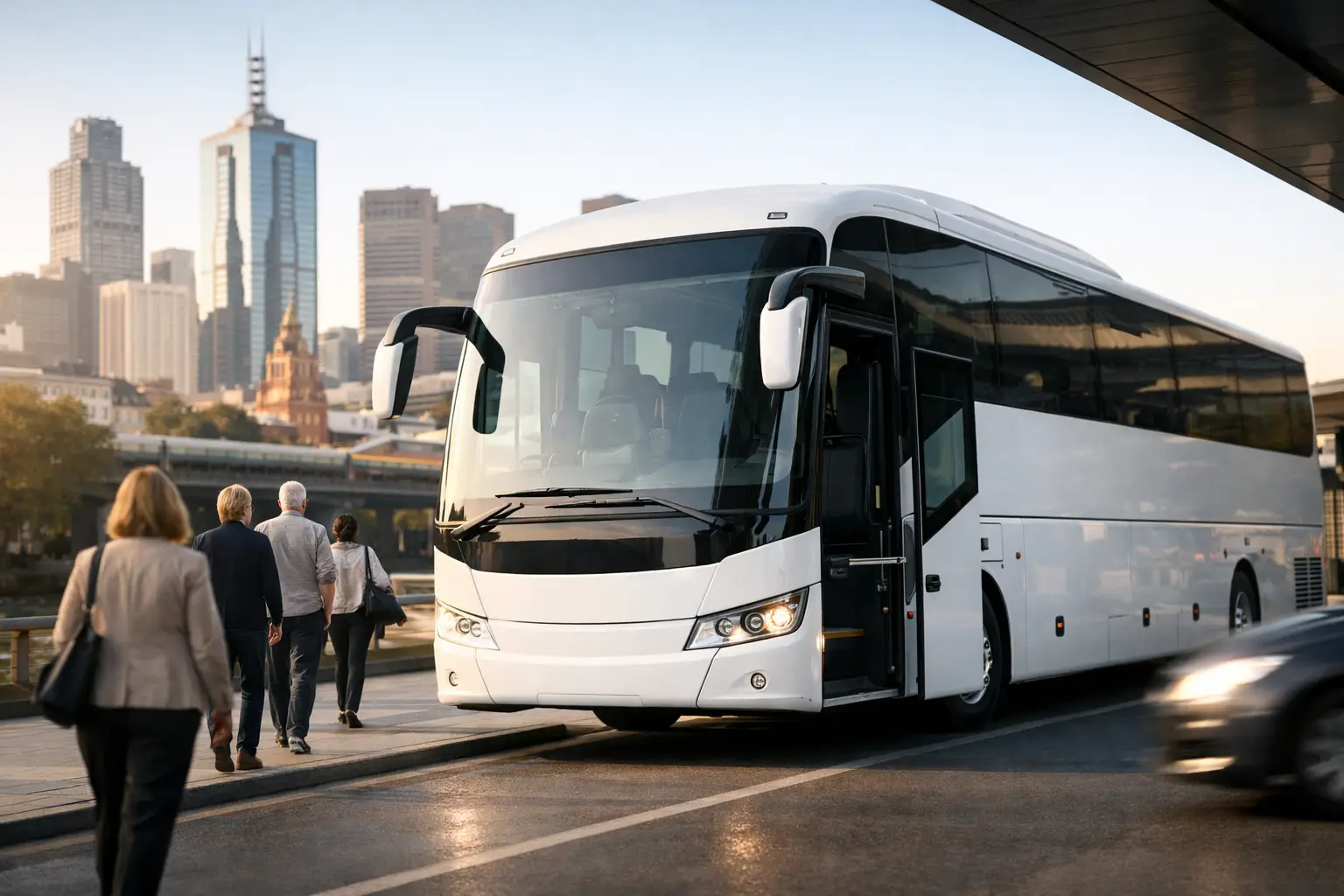
When 30 guests are trying to reach the same venue, a string of separate cars can turn a straightforward plan into a stream of late arrivals, parking questions and missed calls. Coach hire gives groups one clear departure time, one coordinated journey and a comfortable way to arrive together.
For corporate functions, weddings, airport movements, school-related travel, sporting fixtures and Victorian day tours, the right transport does more than move people from A to B. It protects the schedule, gives passengers room to relax and removes the pressure of navigating unfamiliar roads or finding a park at a busy venue.
When coach hire is the right choice
A coach is often the practical answer when the group is too large for a people mover or minibus, or when the journey involves longer distances, luggage or multiple stops. It is particularly useful where punctuality matters – an airport terminal departure, conference registration, ceremony start time or booked winery tasting will not wait for stragglers.
It also changes the experience of the day. Rather than splitting colleagues, guests or family members across several vehicles, everyone can travel in the same space. Conversations begin before the event, directions are handled by the driver and no one has to volunteer as designated driver.
That said, a full-size coach is not automatically the best fit. A smaller group travelling a short distance may be better served by a minibus, while executives travelling to a meeting may prefer individual chauffeur-driven vehicles. The most suitable option depends on passenger numbers, luggage, accessibility needs, the route and the level of comfort required.
Choosing the right coach for your group
Start with an accurate passenger count, then allow for the realities around it. Are there children who require restraints? Will guests carry suitcases, golf bags, prams, trade-show materials or musical equipment? Is the return journey likely to include extra bags or purchases? A vehicle that technically seats everyone may not be comfortable if there is substantial luggage to accommodate.
For airport transfers, luggage is usually the deciding factor. For a wedding shuttle running between a hotel and venue, passenger capacity and ease of boarding may matter more. For a winery tour or day trip, comfortable seating, air conditioning and space for the day’s belongings help make the journey part of the occasion rather than time to endure.
Match the vehicle to the itinerary
A simple point-to-point transfer is different from a multi-stop charter. Share the full itinerary when requesting a booking, including pickup points, planned stops, return times and any time-sensitive commitments. This allows the transport provider to recommend an appropriate vehicle and build realistic travel time into the schedule.
Melbourne traffic can vary sharply by time of day, location and major events. A route through the CBD during peak hour will need different planning from a Mornington Peninsula tour or a transfer to an outer-suburban function centre. Allowing sensible time for loading, traffic and passenger coordination is far more reassuring than building an itinerary around the best possible travel time.
If your group has several pickup points, consider whether one central meeting place will make the journey smoother. Multiple pickups can be worthwhile for convenience, but each stop adds time and creates more opportunities for delay. There is no one-size-fits-all answer – it comes down to the group, the occasion and how fixed the arrival time is.
What to confirm before booking a coach
A clear booking brief helps avoid surprises on the day. Provide the date, pickup and destination addresses, passenger numbers, the nature of the event, luggage requirements and your preferred schedule. If there are flight details, venue access instructions or a contact person at the destination, include those too.
It is equally useful to ask what is included in the quoted service. Confirm the vehicle type, the number of passengers it is intended to carry, waiting time arrangements, tolls, parking or venue access charges, and how changes to the itinerary are handled. For events that run late, ask about the process for adjusting the return collection time.
Safety and professionalism should be central to the decision, not an afterthought. A pre-booked service with an experienced driver and a suitable, well-presented vehicle offers a level of certainty that informal ride options may not provide for a large group. This is especially valuable when passengers include children, interstate visitors, senior family members or important clients.
For family travel, discuss child restraints at the time of booking rather than assuming they will be available. For corporate groups, make the organiser’s mobile number available to the driver and nominate a passenger contact for the return trip. Small details like these make a noticeable difference when people are boarding in a crowded hotel forecourt or outside a busy stadium.
Planning coach transport for popular occasions
Corporate transport needs to look polished while working quietly in the background. A coach can move teams between offices, conferences, airports, client events and off-site meetings without employees needing to coordinate their own transport. It is also a practical choice for staff celebrations where a safe, organised return journey matters.
Wedding coach hire is about looking after guests as much as keeping the schedule. A shuttle can carry guests from accommodation to the ceremony, then to the reception and back again at the end of the night. It is especially helpful where the venue has limited parking, the location is regional or guests may be unfamiliar with the area.
For tours, the benefit is flexibility with structure. Groups can visit wineries, coastal attractions, sporting destinations or regional towns while leaving the driving and route management to a professional. Build in realistic time at each stop, including time for everyone to reboard. A relaxed itinerary nearly always feels more premium than one that rushes guests from place to place.
Airport coach transfers need the most disciplined timing. International departures require more lead time than domestic flights, and groups should account for check-in, baggage drop and terminal walking time. For arrivals, flight monitoring and a clear meeting point reduce confusion, particularly for travellers who have just collected luggage after a long flight.
Make boarding easy on the day
The organiser should arrive a little early, have the passenger list or final headcount handy and communicate the pickup point clearly. At large venues, “outside the main entrance” is rarely specific enough. A hotel driveway, nominated bay, gate number or landmark gives everyone a better chance of finding the vehicle quickly.
Encourage passengers to be ready before the scheduled departure, not at it. This is not about being overly strict; it is about respecting the group’s time and protecting the rest of the itinerary. For return travel, tell guests when and where to meet before they leave the coach. A short reminder from the organiser can prevent a long wait at the end of an otherwise well-run event.
Where the journey is part of a special occasion, comfort counts. Clean seating, climate control, courteous driving and room to settle in can make a meaningful difference after a flight, a full day of meetings or an evening celebration. Who’s Driving You provides organised group transport with professional drivers and a fleet suited to a range of group sizes and occasions.
A well-planned coach journey gives people something increasingly valuable: the freedom to simply be passengers. Set the timings carefully, choose a vehicle that genuinely fits the group, and the road between the plans can become one of the easiest parts of the day.


