A group trip can become difficult before anyone has left the kerb if one passenger’s access needs have been treated as an afterthought. To plan accessible group transport well, start with the people travelling, then match the vehicle, route and level of assistance to what will make every passenger comfortable and safe.
Accessibility is not one standard requirement. One group may need room for folded walkers and a little extra boarding time. Another may include a passenger who uses a wheelchair, someone who needs a low step, a child restraint, or a traveller who finds busy, unfamiliar settings stressful. The right arrangement depends on the details, which is why a clear pre-booked plan is far more reliable than hoping a suitable vehicle will be available on the day.
Start with each passenger’s practical needs
The most useful question is not simply, “Do you need accessible transport?” Ask what will help each person travel comfortably from door to door. This gives the transport provider the information needed to recommend a suitable vehicle and crew arrangement.
Confirm the total number of passengers, including carers, family members and support workers. Then identify any mobility aids travelling with the group, such as wheelchairs, walkers, walking sticks or portable oxygen equipment. Let the provider know whether a wheelchair must remain occupied during the journey or can be folded and stowed in the boot.
It is also worth discussing boarding needs. A passenger may be able to transfer into a standard vehicle but require a wider door opening, grab handles, a low step, additional time or a steady arm while entering and exiting. Do not assume that a people mover, minibus or coach is automatically appropriate because it has more seats. Passenger capacity, luggage space, entry height and mobility access are separate considerations.
For travellers with sensory, cognitive or communication needs, predictability can make a substantial difference. A confirmed pickup time, a clear description of the vehicle, a quiet and courteous driver, and simple instructions about where to wait can reduce stress for everyone in the group. If a passenger is likely to need a familiar carer seated beside them, include that in the seating plan rather than leaving it to chance.
Choose a vehicle for access, not just capacity
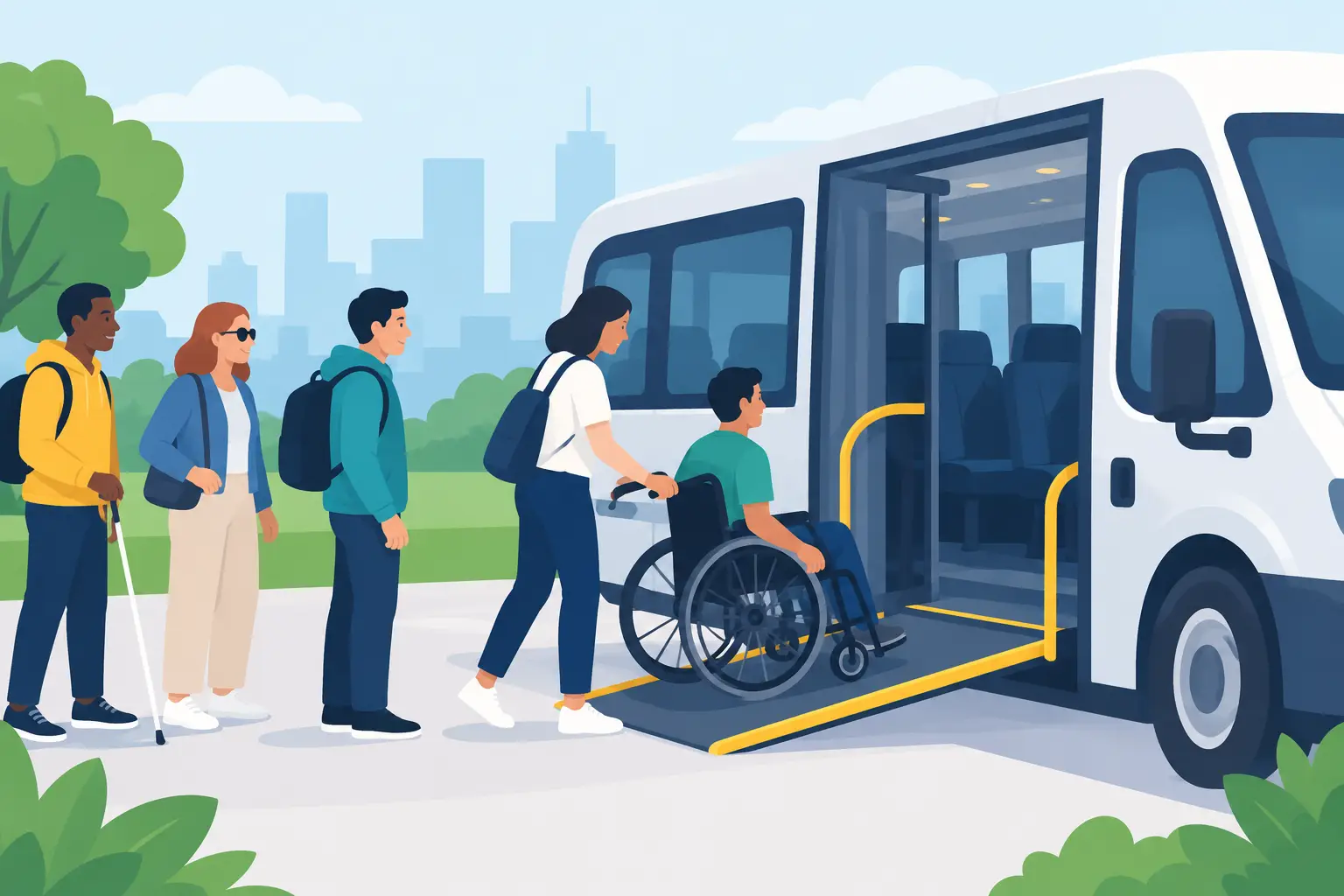
A larger vehicle is not always the best vehicle. A minibus may suit a corporate team with suitcases, while a smaller people mover may be more comfortable for a family group with a walker, pram and child restraints. For passengers using wheelchairs, ask specifically about wheelchair-accessible vehicle availability, safe restraint systems and whether the vehicle can accommodate the required chair dimensions and combined passenger weight.
Give accurate information about bags and equipment. Airport groups often underestimate how quickly luggage fills available space, particularly when mobility aids, prams or event equipment are involved. If the group is travelling for a wedding, sporting fixture or conference, consider garment bags, signage, presentation materials and fold-up chairs as well as standard luggage.
When booking, a good provider should be able to explain the vehicle’s practical suitability rather than offering a vague assurance. Ask about entry and exit arrangements, seat configuration, luggage capacity and the process for securing mobility equipment. It is better to select a vehicle with some spare room than to have passengers squeezed in or essential items left behind.
Check the pickup and drop-off environment
The journey begins where the vehicle stops. A suitable vehicle can still be difficult to use if the pickup point has a steep driveway, narrow access, heavy traffic, limited kerb space or a long walk from the entrance.
Provide the full address and any useful instructions, such as the best entrance, building reception details, a hospital wing, cruise terminal zone or venue loading area. If the pickup is at an airport, stadium or large event precinct, allow for designated vehicle zones and possible road closures. For private homes, mention stairs, uneven paths or tight turning circles where relevant.
The same care is needed at the destination. Confirm whether the group needs to be dropped close to an accessible entrance and whether the driver can wait while passengers are safely received. This can be particularly helpful for medical appointments, aged care visits, theatre outings and unfamiliar venues.
Allow enough time for a calm journey
Accessible group transport should be timed for comfort, not only the fastest possible route. Boarding, securing equipment, settling children and assisting passengers into their seats may take longer than a standard pickup. Building this time into the booking helps avoid rushed decisions at the kerb.
For airport travel, work backwards from the required arrival time and include check-in requirements, traffic conditions and the time needed to unload luggage. For a concert, wedding or major sporting event, factor in road congestion and the extra time needed to locate the correct entrance after drop-off. A planned earlier arrival is usually preferable to asking a group to hurry through a crowded venue.
Return travel deserves equal attention. Set a clear pickup point that the whole group can identify, especially where mobile reception is unreliable or crowds are expected. If the finish time is uncertain, discuss waiting arrangements or a flexible pickup window when making the booking. A confirmed plan avoids one passenger being left to wait on a footpath while the rest of the group searches for the vehicle.
Share the information that helps drivers assist well
Good service starts before the driver arrives. The booking notes should include practical, relevant details, but there is no need to share more personal information than is necessary. Explain what assistance is requested, any equipment being carried, and whether a carer or group organiser will be the main point of contact.
It can help to nominate one traveller to communicate with the driver on the day. That person can confirm the group is ready, advise if the pickup location changes and make sure everyone is accounted for before departure. For larger groups, provide a passenger list or at least a final headcount to the organiser.
If children are travelling, specify their ages and child restraint needs during booking. Australian child restraint requirements matter, but so does practical family travel. Parents should know where children will be seated and allow time for restraints to be fitted correctly. A rushed pickup is not the time to work out whether every child has a suitable seat.
Professional drivers can provide courteous assistance within the service arranged, but support needs vary. If a passenger requires ongoing personal care, lifting assistance or medical supervision, ensure an appropriate carer travels with them. Being clear about this protects passenger wellbeing and helps the transport team prepare properly.
Confirm the plan before travel day
A short confirmation a day or two before departure can prevent most avoidable problems. Recheck the pickup address, passenger number, vehicle type, luggage allowance, mobility equipment and contact mobile numbers. If a flight time, event schedule or venue entrance has changed, advise the provider as soon as possible.
On the day, have mobility aids, bags and essential medications ready before the vehicle arrives where possible. Keep paths clear for safe boarding, and do not place loose items where they could move during travel. Group organisers should also make sure passengers know the pickup time and where to wait, particularly if they are being collected from different rooms, apartments or offices.
Who’s Driving You can assist groups with pre-booked transport across a range of travel occasions, from airport transfers and family outings to corporate movements, tours and special events. The key is to discuss access requirements early enough for the right vehicle and journey plan to be arranged.
Accessible travel is not about making a group fit a standard transport option. It is about organising the journey around the people taking it, so every passenger can arrive feeling included, comfortable and looked after.


