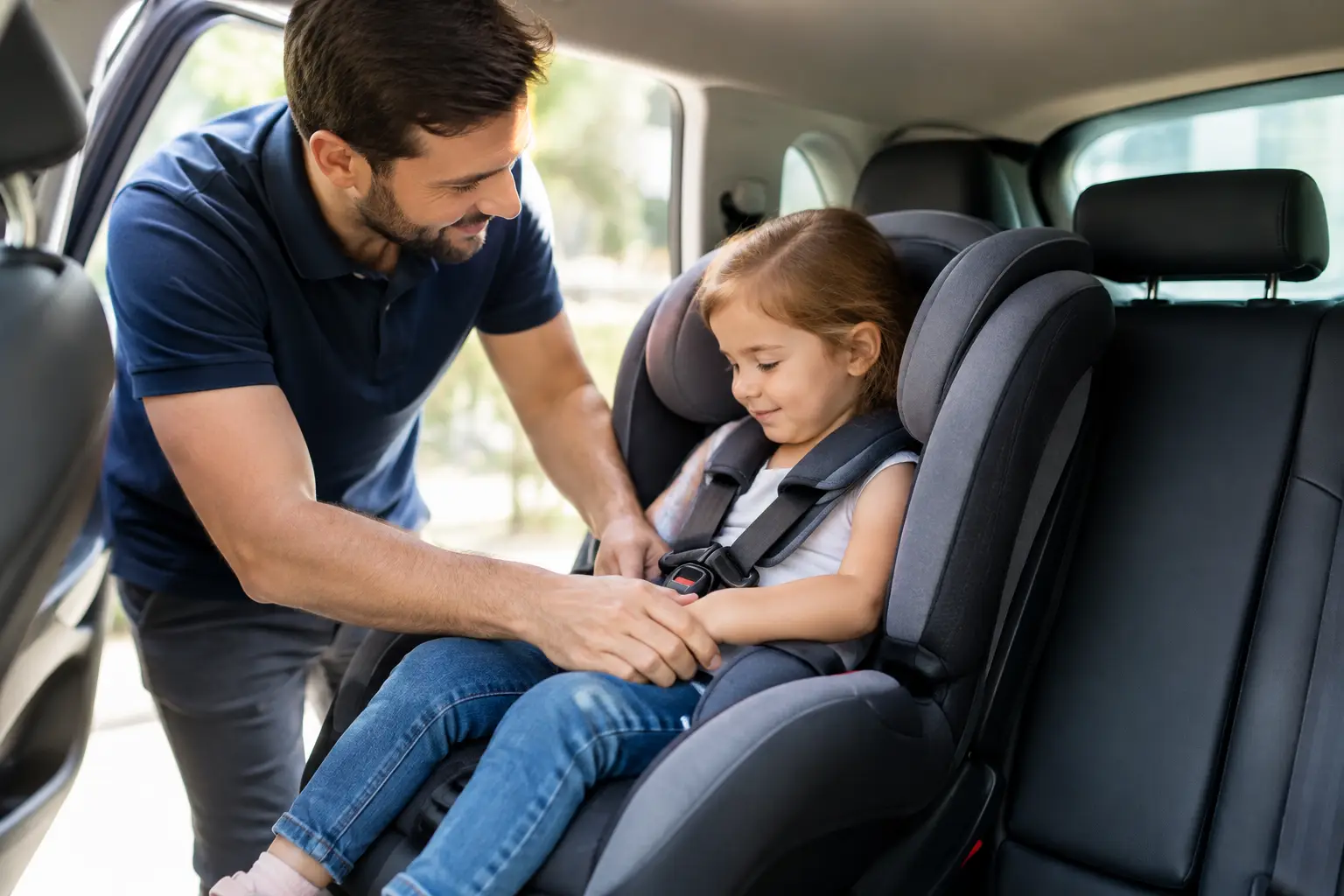
A child seat in the vehicle is only part of the safety picture. Parents also need to know: are child seats professionally fitted before the car arrives, and will the restraint suit their child, the vehicle and the journey? For airport transfers, family events and longer trips, those details can make a busy day feel far more manageable.
The short answer is that child seats can be professionally fitted, but you should never assume this is included with every taxi, rideshare or booked car. A reliable transport provider should clearly confirm what restraint is available, how it will be installed and which child it is intended for before your journey begins.
What professionally fitted child seats should mean
Professional fitting is more than placing a capsule or booster on the back seat. It means the restraint is selected and installed according to its manufacturer instructions and the vehicle’s approved anchorage points, seatbelt system or ISOFIX positions where applicable.
The person fitting the seat needs to consider the child’s age, height and weight range, as well as the vehicle layout. A rear-facing infant restraint, for example, needs enough room to be reclined at the correct angle. A booster seat must work properly with the vehicle’s lap-sash seatbelt, so the belt sits across the child’s shoulder and hips rather than their neck or stomach.
A well-prepared chauffeur or transport operator will also check that the seat is secure before departure. This includes checking the restraint is not twisted, loose or incompatible with the seating position, and that any top tether is correctly attached when required.
A fitted seat is not always the same as a suitable seat
A seat may be tightly installed yet still be unsuitable for the child travelling in it. This is why accurate booking information matters.
When arranging transport, provide each child’s age, approximate height and weight, and whether they usually travel in a rear-facing restraint, forward-facing restraint or booster seat. If you are travelling with a newborn, premature baby or a child with additional support needs, mention this at the time of booking. The provider can then confirm whether the appropriate restraint and vehicle are available.
It also helps to say how many adults, children, prams and bags will be travelling. Three child restraints may not fit safely across every rear seat, particularly in a sedan. A people mover, maxi cab or larger vehicle may provide a safer and more comfortable arrangement, with room for passengers and luggage without compromising the seating position of each restraint.
Why vehicle choice matters
Not all vehicles are fitted out in the same way. Anchorage points, ISOFIX locations, rear-seat width and seatbelt lengths vary between makes and models. A restraint that fits well in one vehicle may not be suitable in another.
This is especially relevant for airport collections. Families often book a standard car, then discover they need space for two child seats, a pram and several suitcases. Planning for the full load from the start helps ensure the allocated vehicle is genuinely suitable, rather than simply large enough to carry everyone.
Are child seats professionally fitted in booked transport?
The answer depends on the operator and the service you book. Some passenger transport providers offer child restraints as an added booking requirement, while others expect customers to supply and install their own. Standard taxis and rideshare vehicles may also operate under different practical arrangements, so availability should be confirmed rather than presumed.
For a pre-booked family transfer, ask direct questions before confirming your ride. You should be able to establish whether the provider supplies the restraint, whether it is fitted before collection, and whether the driver will check the fit when you board. You may also want to ask whether the service can accommodate multiple restraints and whether a particular vehicle type is recommended.
At Who’s Driving You, family transport can be arranged with child restraints requested in advance, allowing the team to allocate an appropriate vehicle and prepare for your passengers. That level of planning is particularly valuable for early airport departures, late-night arrivals and occasions when you are travelling with children for the first time.
What to check before the vehicle leaves
Even when a child seat has been prepared for you, parents and carers should take a moment to look over the setup. You know your child best, and a brief check gives you confidence before the journey starts.
First, make sure the seat is appropriate for your child and that the harness or vehicle seatbelt can be adjusted snugly. Bulky coats should be removed before a harness is fastened, as they can create slack. For a harnessed restraint, the straps should lie flat and sit at the correct height for the child. For a booster, check that the lap portion of the belt sits low over the upper thighs and the sash crosses the middle of the shoulder.
Next, look at the restraint itself. It should sit firmly against the vehicle seat without excessive movement at the belt path. If there is a top tether, it should be connected to the approved anchor point, not to a luggage hook or another unsuitable fitting. Never be embarrassed to ask the driver to explain the installation or make an adjustment if something does not look right.
Finally, keep loose items under control. Bags, drink bottles and hard toys can become hazards during sudden braking. Place luggage securely in the boot or designated storage area where possible, while keeping essential items such as nappies, medication and a comfort toy within easy reach.
Australian rules and practical responsibility
Australian child restraint requirements are designed to protect children at different stages of development, but the specific rules and exemptions can vary by state, territory and type of vehicle. In Victoria, children generally need to use an approved child restraint or booster appropriate to their age and size before progressing to an adult seatbelt.
For families, the practical standard should be higher than simply asking whether an exemption may apply. The safest option is to use an approved, correctly fitted restraint whenever one is required for your child. A professional driver can support that process, but parents and carers remain an essential part of making sure the restraint suits the child.
If you are travelling interstate, arriving from overseas or booking transport for someone else’s children, allow extra time to confirm the arrangements. Overseas car seats are not always approved for use in Australia, and an unfamiliar restraint can take longer to fit correctly.
When bringing your own seat makes sense
There are times when bringing your own child seat is the best choice. Your child may be particularly comfortable in a familiar restraint, you may need a specialised model, or you may be continuing your journey in a hire car or relative’s vehicle. In these cases, tell the transport provider in advance that you will have your own seat and ask whether there are any vehicle requirements to consider.
You should also plan for what happens after drop-off. If you are flying, check whether the airline will accept the restraint as checked baggage or cabin baggage where permitted. If you are heading to a hotel before collecting a rental car, ask whether the seat can be stored safely. A good travel plan considers the seat throughout the day, not only the trip to the airport.
Booking with confidence
The easiest way to avoid uncertainty is to make child restraints part of the booking conversation, not an afterthought. Give clear details, choose a vehicle with adequate space and ask for confirmation that the required restraints will be ready and fitted for collection.
A calm departure starts well before the driver arrives. When the vehicle, seating and child restraint arrangements have been planned properly, parents can focus on the journey ahead and children can travel in the comfort and security they need.


