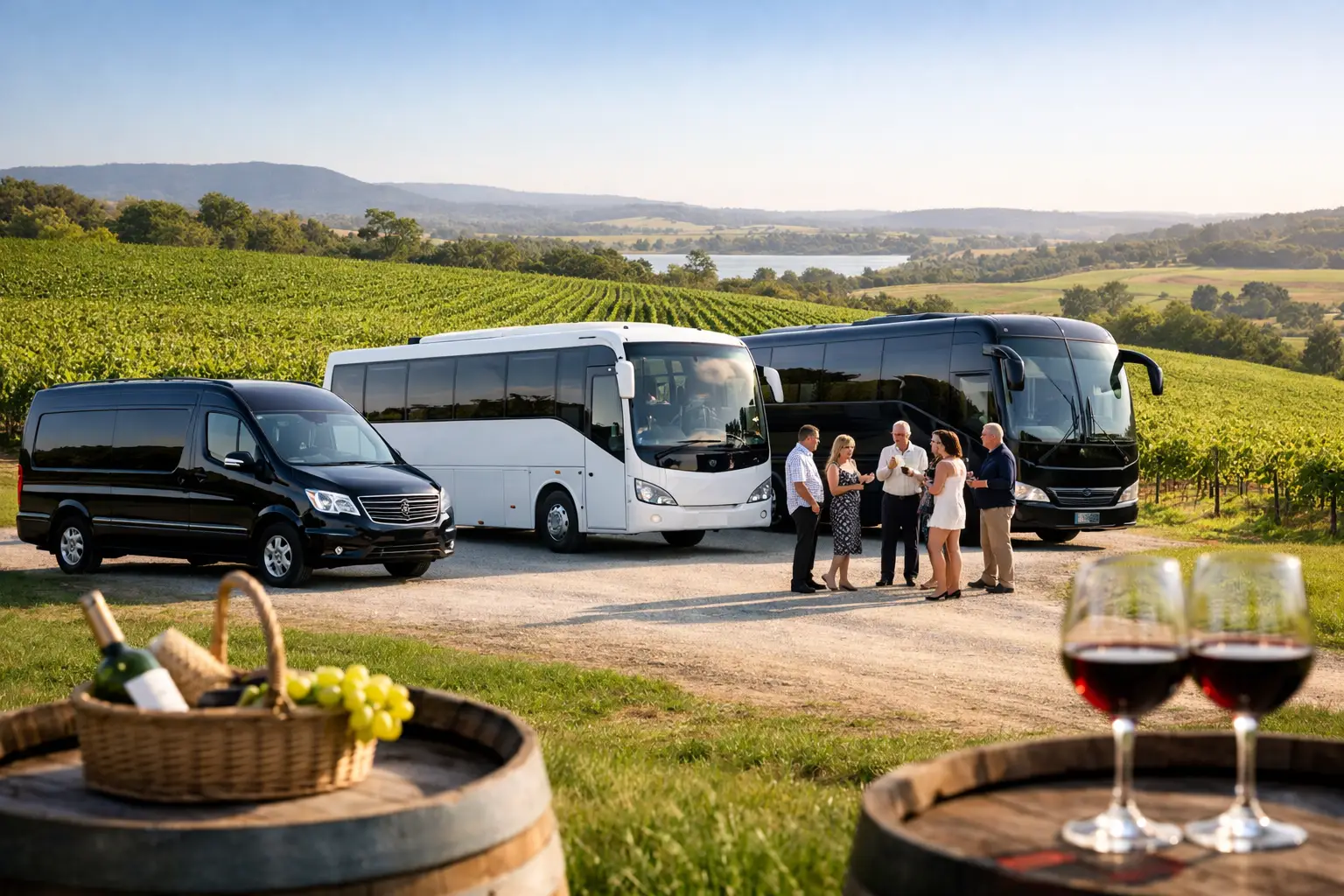
A winery day is meant to be about good company, local food and the bottles worth taking home – not nominating a driver, splitting cars or trying to locate everyone in a crowded car park. The best transport for winery groups is pre-booked, chauffeur-driven travel that keeps the whole party together, arrives to schedule and gives everyone the freedom to enjoy the tasting experience responsibly.
For groups heading to the Yarra Valley, Mornington Peninsula, Macedon Ranges or another Victorian wine region, the right vehicle makes a noticeable difference. It affects how comfortably you travel, how easily your day runs and whether the journey between cellar doors feels like part of the occasion rather than a logistical exercise.
Why winery groups benefit from private transport
Winery visits rarely run exactly to the minute. A tasting may take longer than expected, lunch can become a highlight of the day, and one cellar door might lead to an unplanned stop at another nearby producer. Private group transport gives your itinerary useful structure while allowing room for those moments.
Unlike relying on several cars or arranging separate ride-hailing trips, one booked vehicle gives the group a clear meeting point and a consistent plan. Your driver knows the collection location, planned stops and final drop-off, so there is no need for guests to manage directions, parking or changing availability throughout the day.
There is also the safety factor. Wine tasting and driving do not belong together. A professional chauffeur provides a responsible option for the full group, including the person who would otherwise have spent the day watching the clock and limiting their experience. Everyone can relax knowing the return journey is already organised.
Choosing the best transport for winery groups
The best choice depends on group size, travel distance, luggage needs and the style of day you have planned. A compact group travelling from Melbourne for a leisurely lunch has different requirements from a larger party visiting several venues over a full day.
Executive cars for couples and small groups
For two to four passengers, an executive car offers a refined and quiet way to travel. It suits couples, small corporate groups or visitors seeking a more private wine-region experience. These vehicles work particularly well when the itinerary includes a long lunch, a limited number of cellar doors and a return transfer to a hotel, home or airport.
Boot space should be considered early, especially if guests expect to purchase wine. A few bottles are easy to accommodate, but larger purchases may affect the most suitable vehicle choice.
People movers and maxi cabs for intimate groups
People movers and maxi cabs are a practical option for families, friendship groups and smaller celebrations. They allow passengers to travel together without the formality or scale of a larger bus. This is often the right fit for groups of five to ten people, depending on the vehicle and luggage requirements.
Comfort matters on regional roads. Look for a clean, air-conditioned vehicle with sufficient passenger space, particularly if your day involves travelling from central Melbourne to the Yarra Valley or another destination more than an hour away. A vehicle that feels comfortable on the first leg should still feel comfortable after lunch and a few tastings.
Minibuses for larger parties
For groups that would otherwise need two or three cars, a minibus is usually the more organised solution. It keeps everyone on the same timetable and avoids the familiar problem of one vehicle arriving late, taking a wrong turn or needing to find a different parking area.
Minibuses are well suited to birthday groups, hens celebrations, team outings and extended families. They also make it simpler to plan pickup points. While one central pickup is the most efficient option, a planned route with a small number of collection stops can work well when guests are coming from different parts of Melbourne.
Buses and luxury coaches for major events
A bus or luxury coach is the sensible choice for bigger social groups, corporate functions and wedding-related winery visits. The benefits are not limited to capacity. Larger vehicles give organisers one clear arrival time at every venue, a single point of contact and far less passenger coordination on the day.
For premium corporate hosting or a special occasion, a luxury coach adds a more polished travel experience while maintaining the practical advantages of group transport. It is particularly useful when the journey itself is a significant part of the day, rather than simply a transfer between venues.
Plan the day around the experience, not the road
A well-paced winery itinerary generally allows enough time to enjoy each stop without rushing guests back to the vehicle. Three cellar doors plus lunch is often more enjoyable than trying to squeeze in five or six tastings. Travel times, venue booking requirements and the pace of your group should shape the plan.
Start by confirming the wineries you would like to visit and whether they accept groups of your size. Some venues require advance tasting bookings, especially on weekends and during peak periods. Once the venues are confirmed, provide the pickup address, preferred departure time, passenger numbers and intended finish time when arranging transport.
It is wise to build in a little flexibility. Regional traffic, a popular lunch service or a longer-than-expected tasting can affect timings. An experienced chauffeur service can help set realistic travel windows, rather than creating an itinerary that looks good on paper but leaves everyone checking their mobile.
If your group includes guests with mobility considerations, young children or substantial luggage, mention it at the time of booking. The right vehicle can then be allocated from the beginning. Families may also need appropriate child restraints organised in advance, rather than assuming they will be available on the day.
What to look for in a winery transport provider
Price matters, but it should not be the only consideration. A winery day has multiple moving parts, and the cheapest option can become expensive if it is late, unsuitable for the group or unavailable when your lunch booking ends.
A dependable provider should offer clear booking details, a vehicle suitable for your passenger count and a professional driver who understands scheduled group travel. The service should also be transparent about waiting time, additional stops, after-hours travel and any changes to the agreed itinerary.
For a full-day booking, ask how the driver will be available between venues. In most cases, keeping the same vehicle and chauffeur for the day is the most convenient arrangement. Your group can leave personal items securely in the vehicle where appropriate, return to the same familiar space after each stop and avoid re-explaining the plan.
Who’s Driving You provides chauffeur-driven winery and group transport across Melbourne and Victoria, with vehicle options ranging from executive cars and people movers to minibuses, buses and luxury coaches. The practical advantage is being able to match the vehicle to the group instead of asking the group to fit around a limited transport option.
Make the booking details work harder for you
A few accurate details at the start can prevent unnecessary changes later. Confirm the final passenger number before the booking date, particularly where guests are still deciding. Share each venue address, not just the wine region, as wineries can be some distance apart even when they appear close on a map.
Let your transport provider know if you are planning a surprise celebration, carrying decorations, collecting wine purchases or making a dinner stop on the way home. These details may affect vehicle size, timing and how the day is managed. For corporate groups, it can also help to nominate one organiser as the single contact for updates.
Your departure time deserves as much attention as the first tasting. A relaxed start is better than arriving early and waiting outside a cellar door, but leaving too late can put pressure on the whole itinerary. Consider when guests need to be home, whether peak-hour traffic will affect the return trip and how long a regional lunch is likely to run.
The right winery transport should feel almost invisible once the day begins: a courteous driver at the right place, a comfortable vehicle waiting after each stop, and your group free to enjoy Victoria’s wine country together.


