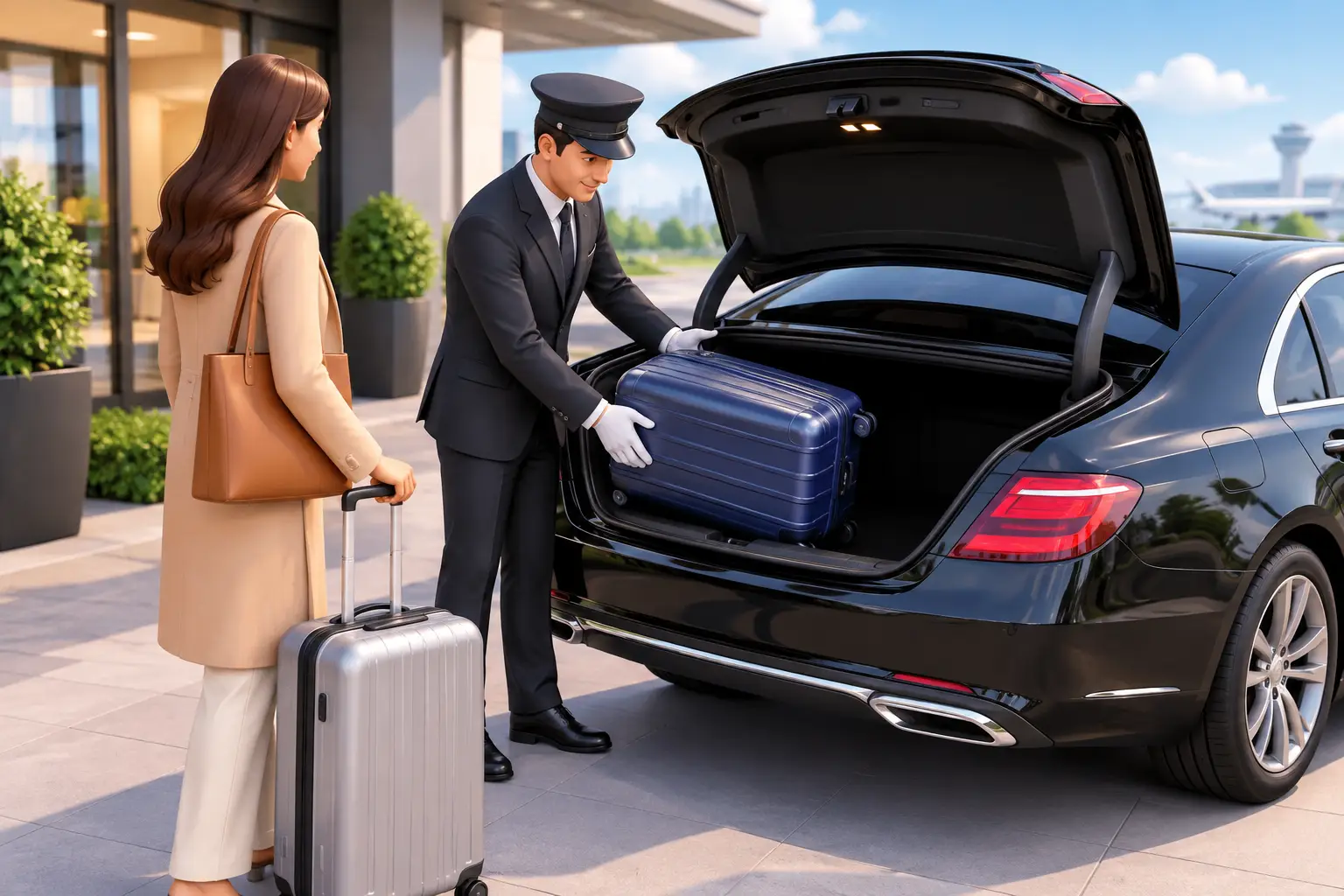
An airport transfer can be perfectly timed and still become uncomfortable if the vehicle is too small for the people and bags travelling in it. A clear chauffeur luggage policy helps prevent that problem before your driver arrives. It is less about imposing rigid limits and more about matching your group, luggage and journey to a vehicle with enough room to travel safely and comfortably.
For a single business traveller with a carry-on, most executive vehicles will be suitable. For a family returning from an overseas holiday, a wedding party with garment bags, or a group heading to the snow, luggage can quickly become the deciding factor. Providing accurate details when you book means the right vehicle can be allocated from the outset.
What a chauffeur luggage policy usually covers
A luggage policy explains how luggage capacity is assessed for a booked vehicle. The number of passengers a vehicle can legally carry is not always the same as the number it can carry with large suitcases in the boot. This is particularly relevant for airport transfers, where travellers often have checked bags, cabin bags and additional personal items.
Capacity depends on several practical factors: the vehicle type, the size and shape of each case, the number of passengers, whether child restraints are required, and whether the group is carrying oversized equipment. A sedan may offer an excellent experience for one to three passengers with standard luggage, while a people mover, maxi cab, minibus or coach may be the more suitable choice for larger groups and heavier loads.
The goal is straightforward: bags should be stowed securely, passengers should have appropriate seating, and the driver should retain clear visibility and safe access to the vehicle. Luggage should not need to sit on laps or obstruct aisles, exits or seatbelts.
Passenger numbers and luggage capacity are different
It is easy to book according to passenger count alone. Four adults might fit in a vehicle, but four large hard-shell suitcases, four carry-ons and a pram may not. The same applies to executive travel. Two colleagues travelling light can comfortably use a premium sedan; two colleagues carrying exhibition materials may require a larger option.
When making a booking, consider the whole load rather than only checked baggage. This includes cabin cases, backpacks, laptop bags, prams, portable cots, golf clubs, musical instruments, ski gear and shopping collected during a trip. These items can affect the available boot space more than travellers expect.
Soft bags can sometimes be arranged more efficiently than rigid cases, but this should never be assumed. Large or unusually shaped items need to be declared so the transport provider can plan properly. A professional chauffeur service would rather arrange a larger vehicle in advance than have customers facing an avoidable delay at collection time.
A practical way to describe your bags
Clear information is more useful than simply saying “a few bags”. Let the booking team know how many pieces you are taking and whether they are small, medium or large suitcases. Mention cabin cases separately, along with any oversized items.
For example, a useful description might be: two adults with two large checked suitcases, two cabin bags and a pram. For a group journey, note the number of passengers and bags per person where possible. This gives the team a realistic picture of what needs to fit.
If you are unsure whether your load will fit, it is sensible to choose extra space. The difference between a standard sedan and a people mover can make a long airport run or regional transfer far more comfortable, especially after a flight.
Choosing the right vehicle for your luggage
The best vehicle is determined by the balance of passengers, bags and the type of journey. Executive sedans are well suited to business trips, couples and small groups with ordinary luggage requirements. SUVs and people movers provide additional flexibility for families, travellers with more bags and guests who value extra room.
For larger parties, maxi cabs and minibuses can make travel much easier to manage. Instead of dividing a group across multiple cars and hoping everyone arrives together, passengers and luggage can travel in an organised format. Coaches are particularly useful for tours, conferences, sporting groups, school-related travel and events where the luggage requirement is substantial.
There is a trade-off to consider. A larger vehicle may cost more than the smallest option that technically carries your group, but it can reduce stress, improve comfort and avoid needing a second vehicle. For corporate bookings, it also creates a more polished arrival experience when clients, colleagues and their luggage are transported together.
Families need room for more than suitcases
Family travel often involves equipment that is easy to overlook during booking. Prams, child restraints, nappy bags and portable travel items all take up space. If you need child restraints supplied or fitted, advise this when booking, as it can influence seating configuration and available luggage capacity.
For families travelling to or from the airport, a people mover or larger vehicle can be a practical choice even when passenger numbers are modest. It provides room for children to sit safely, adults to travel comfortably and bags to remain properly stowed.
Special items should always be declared
Oversized or fragile items require more planning than standard cases. Golf clubs, bicycles, surfboards, skis, mobility aids, display materials and musical instruments may need a specific vehicle type or a separate luggage solution. Some items may not be suitable for certain vehicles due to dimensions, safety requirements or the need to protect both the item and passengers.
Tell the booking team the approximate size of the item and whether it is in a case. Photographs can also help clarify unusual luggage requirements if requested. Do not rely on folding seats or placing equipment in a passenger area without prior confirmation. A vehicle needs to remain safe and comfortable for everyone on board.
Fragile belongings should be packed securely by the passenger. While chauffeurs can assist with loading and unloading where appropriate, luggage is carried at the owner’s risk unless other arrangements have been confirmed. Keep essential documents, medicines, valuables and electronics with you rather than packed away in the boot.
Airport transfers: allow for changing luggage needs
Airport journeys deserve particular care because baggage levels often differ between the outbound and return trip. A group departing for a weekend away may travel with light bags, then return with shopping, gifts or additional items. International travellers can also have more luggage than expected after a longer stay.
If your return transfer is booked at the same time as your outbound journey, provide luggage details for both legs. It may be appropriate to use a different vehicle on the return trip. This is especially common for visitors who begin with standard holiday luggage and finish with wine purchases, souvenirs or event equipment.
Flight changes are another reason accurate contact details matter. A scheduled chauffeur service can monitor the agreed arrangements and respond professionally, but the booking should include the correct flight information and a mobile number for the lead traveller.
How to avoid luggage surprises on the day
A little preparation keeps collection simple and punctual. Before confirming your booking, check your final passenger list and count every item that will travel with you. Be realistic about suitcase size, and include bulky extras rather than assuming they will fit around the edges.
For group travel, nominate one person to provide the luggage details. This avoids multiple people giving different estimates and makes changes easier to manage. If someone adds a large bag, pram or special item after the original booking, notify the transport provider as soon as possible.
On collection, have bags ready near the pick-up point where practical. Your chauffeur can then load efficiently and get the journey underway without unnecessary delays. For airport pickups, keep your group together after collecting baggage and follow the agreed meeting instructions.
Why advance planning makes the journey better
A considered chauffeur luggage policy protects the quality of the whole journey. It supports safe loading, appropriate vehicle allocation and a calmer experience for passengers. It also gives the driver the information needed to prepare for your arrival, whether that means making room for a pram, planning for golf bags or allocating a minibus for a travelling team.
At Who’s Driving You, vehicle choice is part of planning the journey properly, not an afterthought. With executive cars, people movers, maxi cabs, minibuses and coaches available, customers can select transport that suits both the people travelling and what they need to bring.
If your bags are likely to be the first thing you worry about on travel day, mention them when you book. The right vehicle leaves everyone with room to settle in, enjoy the ride and arrive ready for what is next.


