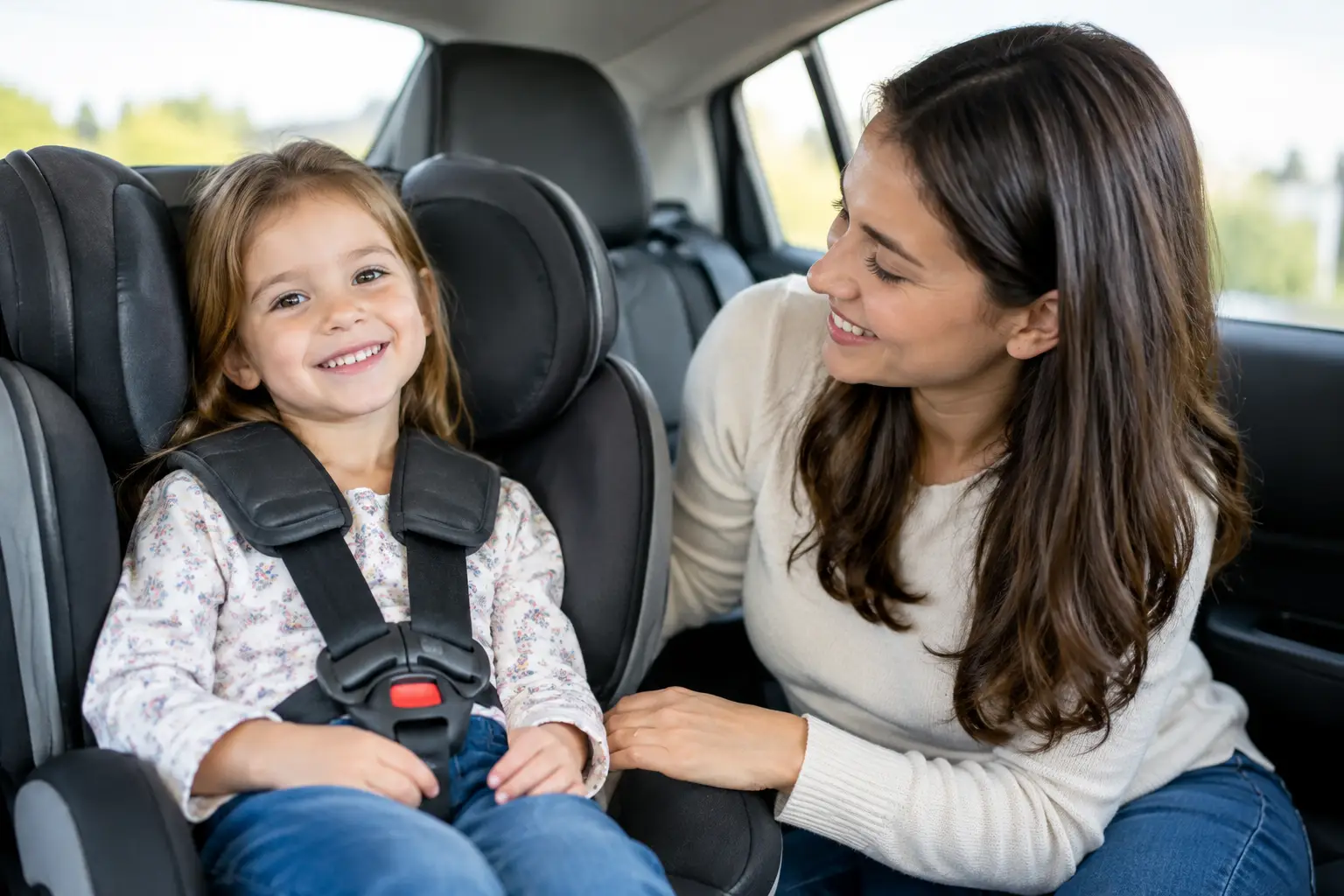
A family transfer can become complicated well before the car arrives. There may be an infant capsule, a rear-facing seat, a booster, pram bags, tired children and a flight time that cannot move. A careful child restraint transport review helps turn that pressure into a clear booking plan, so everyone has an appropriate seat and enough room to travel comfortably.
The right choice is not simply the largest vehicle available. It is the vehicle, restraint arrangement and driver service that suit your children’s ages and sizes, the number of passengers, luggage and the journey ahead. Whether you are heading to Melbourne Airport, travelling home from hospital, attending a wedding or arranging an interstate transfer, planning the details early makes a genuine difference.
What a child restraint transport review should cover
A useful review starts with the passengers, not the vehicle category. Child restraints are selected and used according to a child’s age, height and weight, as well as the manufacturer’s instructions and applicable Australian road rules. A seat that was ideal six months ago may no longer be the correct fit.
When making an enquiry, provide each child’s age and approximate height or weight. This gives the transport provider the information needed to consider whether a rear-facing restraint, forward-facing child seat or booster seat is appropriate. It also avoids the common mistake of requesting “three child seats” without explaining that the children have very different needs.
It is equally important to confirm the passenger count. Adults, children and infants all need a safe, allocated seating position. Holding a child on an adult’s lap is not a safe substitute for an approved restraint while a vehicle is moving.
The review should also include your pickup and drop-off requirements. Airport kerbside pickups, hotel entrances, apartment loading zones and major event venues can all affect where the vehicle can safely stop and how much time is needed to load children and luggage.
Why vehicle choice matters as much as the restraint
A restraint can be appropriate on its own but unsuitable once it is placed alongside other seats, passengers and bags. This is why families should look beyond a standard sedan when travelling with more than one child or substantial luggage.
For one child and light luggage, an executive car or larger SUV-style vehicle may be suitable, depending on the seating layout and restraint requested. For two or three children, a people mover or maxi cab often provides more practical access, additional room between passengers and space for a pram in the boot. Larger family groups, grandparents travelling with children, or groups moving between venues may be better served by a minibus.
There are trade-offs. A larger vehicle can give everyone more room, but it may not be necessary for a short journey with minimal bags. Conversely, choosing the smallest vehicle to reduce cost can create an uncomfortable loading process and leave little room for a pram, portable cot or multiple suitcases. A good provider will discuss these details rather than making assumptions.
Consider the full luggage picture
Families regularly underestimate what needs to travel with them. A folded pram is only part of the equation. There may also be a nappy bag, travel cot, booster cushions, car-seat accessories, carry-on bags and checked luggage. If you are arriving from an international flight, extra baggage is particularly common.
Tell the booking team what you are bringing, including whether the pram is full-size or compact. This helps them allocate a vehicle that has enough usable boot space without compromising passenger comfort. It is far easier to select the right vehicle before collection than to try to rearrange bags beside a busy airport roadway.
Questions to ask before booking family transport
Professional family transport should feel straightforward, but it is reasonable to ask direct questions before confirming your trip. Ask whether the requested child restraint can be supplied, how the booking team records each child’s requirements and what vehicle is planned for your group.
You should also confirm whether the restraint will be fitted before pickup, whether there is time to check the fit when you enter the vehicle, and what happens if your flight or event runs late. For airport travel, provide your flight number where requested so the pickup can be coordinated with your arrival.
If you intend to bring your own restraint, tell the provider in advance. Your familiar seat may be the best option for a child with specific comfort or medical needs, but the vehicle still needs suitable seating positions and time for safe installation. Keep the seat’s instructions available and allow a little extra time at pickup.
For a return trip, make sure both journeys are discussed. The requirements for an airport departure and a late-night collection may be identical, but they should not be assumed to be. Confirm the collection point, local contact number, number of restraints and luggage for each leg.
Child restraint transport review: safety beyond the seat
The restraint is central, but family safety is supported by the entire journey. A punctual driver reduces the temptation to rush through loading. A clean, well-maintained vehicle makes it easier to position children and manage bags. Clear communication gives parents confidence about where to meet the driver and what to expect on arrival.
Allow time for children to be settled before the vehicle departs. Check that each child is in the allocated seat, that harnesses or belts are positioned correctly according to the restraint instructions, and that loose items are stored where possible. This takes only a few moments and is especially worthwhile after a long flight, when children may be sleepy or unsettled.
Parents and carers should also be realistic about travel times. Peak-hour traffic, roadworks, sporting events and wet weather can change a simple trip across Melbourne. Booking a service with a planned pickup time gives you more control, but leaving a sensible buffer remains wise, particularly for flights, medical appointments and cruise terminal arrivals.
The value of a professional, pre-booked service
On-demand transport can be convenient for a solo trip, but it introduces uncertainty when child restraints are essential. The arriving vehicle may not have the seating capacity, boot space or restraint arrangement your family needs. Trying to solve those issues while standing on the footpath with children is not a pleasant start to any journey.
A pre-booked chauffeur-driven service allows the key information to be considered ahead of time. At Who’s Driving You, family transport can be planned around child restraints, passenger numbers, luggage and pickup requirements, with a suitable vehicle selected from a broader fleet. That preparation is particularly valuable for airport transfers, family celebrations and longer regional travel.
It also creates a clearer point of contact if plans change. If a flight is delayed, an event finishes later than expected or a child becomes unwell, you know who to call rather than relying on availability at the last minute.
When the cheapest option is not the best fit
Price matters to every family, yet comparing quotes without comparing inclusions can be misleading. A lower fare may not account for a required restraint, waiting time, airport access conditions, luggage capacity or the type of vehicle being sent. The result can be an apparent saving that creates stress on the day.
Look for clarity rather than vague promises. You should understand what vehicle has been allocated, how many passengers it accommodates, whether the requested child restraint has been noted and where the driver will meet you. If any detail is unclear, ask before you confirm.
That does not mean every journey requires a premium-sized vehicle or the most elaborate arrangement. A short local transfer for one parent and one child has different needs from a family of six travelling to the airport for a two-week holiday. The best booking is the one that matches the real journey, with no overlooked safety requirement and no unnecessary complexity.
The most reassuring family travel plans are often the simplest: share your children’s details, explain the luggage, choose a vehicle with room to spare and confirm the pickup arrangements early. Then, when the day arrives, your attention can stay where it belongs – on enjoying the time with your family, not solving transport problems at the kerb.


