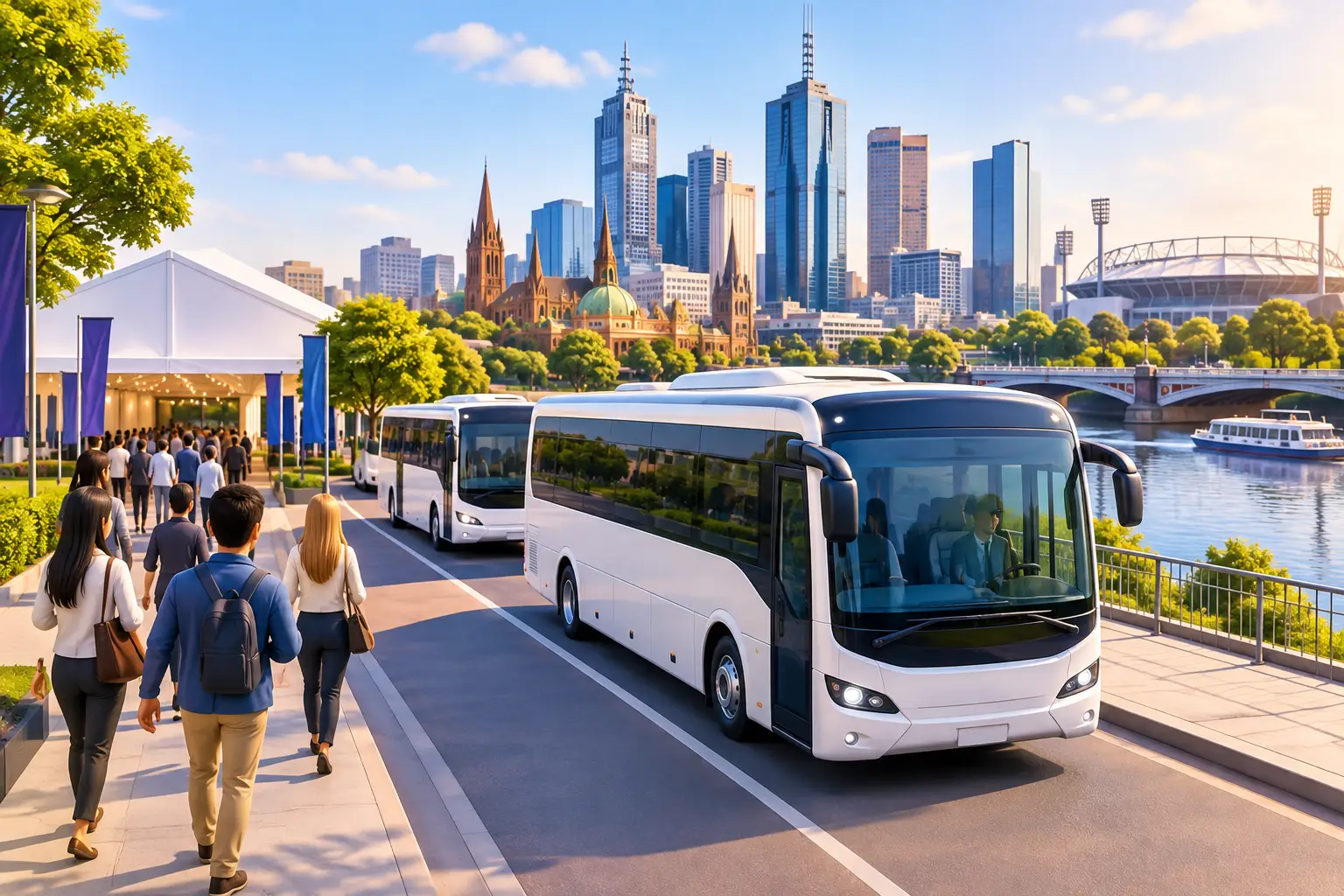
At 5.40 pm, a conference can look perfectly organised from inside the venue while 180 guests are still trying to find the correct entrance, waiting for rides or walking from an overflow car park. A well-planned event shuttle service prevents that moment. This event shuttle logistics guide is designed to help Melbourne organisers create a calm, punctual transport experience for guests, speakers, staff and VIPs.
Shuttle planning is not simply a matter of booking a bus. It is about matching vehicle capacity, pick-up locations, road conditions, guest behaviour and venue access to a realistic operating plan. Get those details right early and transport becomes one less concern on event day.
Start with the guest journey, not the vehicle
The right vehicle is determined by the journey your guests need to make. Before selecting minibuses, coaches or people movers, map the trip from beginning to end. Consider where guests are arriving from, where they will wait, how they will identify their vehicle and what happens when they arrive at the venue.
A corporate dinner might need executive cars for keynote speakers, people movers for interstate guests arriving at Melbourne Airport, and a larger shuttle for staff travelling from a CBD office. A wedding may require guest transfers between accommodation, ceremony and reception, with a late-night return service. A winery event can call for a coach with ample room for guests to travel together comfortably.
The more clearly you define each passenger group, the easier it is to avoid a common mistake: sending one vehicle type to solve several different transport needs. It can be more efficient to use a combination of vehicles than to overbook a large coach or run too few trips with a smaller minibus.
Build a realistic shuttle schedule
Event schedules often show a single arrival time, but guests do not arrive all at once. Some will be early, some will be delayed by flights, traffic or meetings, and some will leave before the formal close. Your transport plan needs enough structure to keep people moving, with enough flexibility to handle normal variations.
Work backwards from the non-negotiables
Start with the times that cannot move: registration opening, ceremony commencement, a keynote address, a stadium gate opening or a booked dinner sitting. Then allow time for guests to board, for the vehicle to travel, and for passengers to walk from the drop-off point to the actual venue entrance.
For major Melbourne events, factor in peak-hour traffic, roadworks, sporting fixtures, demonstrations and restricted access around the CBD. A route that usually takes 20 minutes can take much longer on a Friday afternoon or during a busy event period. Building a sensible buffer is not wasted time. It protects the guest experience when conditions change.
For return trips, choose either fixed departure times or a shuttle loop. Fixed times suit structured events where most guests leave together. A loop service is often better for conferences, festivals and large functions where people depart in waves. The right choice depends on how predictable the event finish will be.
Avoid optimistic loading times
Allow more time than you think for boarding. Guests may be carrying luggage, wearing formal attire, travelling with prams or needing assistance. If several pick-ups are involved, the driver also needs time to safely pull in, confirm passengers and depart without rushing.
For large groups, stagger pick-up times by hotel, office or car park rather than asking everyone to assemble at one point. This reduces crowding and makes it easier to identify passengers who have not arrived.
Plan pick-up and drop-off points with the venue
A vehicle can be on time and still deliver a poor experience if it cannot safely access the venue. Confirm pick-up and drop-off arrangements with the venue, not just the street address. Ask where coaches can stop, whether there is a designated bus zone, how long vehicles can wait and whether drivers need a permit or a contact on arrival.
At busy venues, a clear meeting point matters. “Outside the main entrance” may sound simple, but a main entrance can have several doors, multiple levels and heavy pedestrian traffic. Give guests a precise instruction, such as a named hotel porte cochere, a signed coach bay or a nominated corner near the venue.
Consider the practical details at each location. Is there shelter if it rains? Is the footpath wide enough for a group to wait safely? Is there lighting for an evening departure? Can passengers with mobility needs board comfortably? These questions are especially relevant for family events, senior groups and guests travelling after dark.
Create one clear transport brief
Transport confusion usually comes from information being scattered across emails, run sheets and group messages. A single event transport brief keeps the organiser, venue contact, driver and event staff working from the same plan.
For a complex event, the brief should cover these operational essentials:
- event date, service times and a reliable on-the-day contact;
- pick-up addresses, exact meeting points and planned departure times;
- passenger numbers for each journey, including luggage, prams or mobility requirements;
- vehicle allocations, driver instructions and venue access arrangements;
- return-trip timing, contingency arrangements and the process for locating a late guest.
Share guest-facing instructions separately in plain language. Include the vehicle departure time, where to wait, what vehicle to look for and a mobile number for the event contact. Avoid asking guests to interpret a detailed operations schedule. They only need the information that helps them board confidently.
Choose capacity with comfort in mind
Passenger numbers are the starting point, not the final answer. A fully occupied vehicle may be suitable for a short inner-city transfer, but it may not be comfortable for a longer airport journey with luggage or for guests in formalwear. Luggage, child restraints and accessibility equipment all affect usable capacity.
It is also worth planning for a small number of extra passengers. Last-minute additions are common at corporate functions and weddings, while delegates may bring a colleague or partner to an evening event. Whether you need spare seats depends on the nature of the occasion, but having no margin at all can create unnecessary pressure.
For premium events, vehicle presentation is part of the experience. Clean, comfortable vehicles and courteous, professional drivers set the tone before guests enter the venue. For executive transfers, a chauffeur-driven car or people mover may be more appropriate than placing senior guests on a large shared coach. For larger groups, a minibus or coach keeps everyone together and simplifies arrival management.
Prepare for the exceptions
Even the best schedule will encounter an exception. A flight can be delayed, weather can slow traffic, a guest can board the wrong service or an event can run overtime. The answer is not to plan for every imaginable disruption. It is to decide in advance who can make decisions and how they will communicate them.
Nominate one transport lead who has the booking details, passenger lists and driver contact process. This person should be available during the key arrival and departure windows, rather than trying to manage transport while hosting guests or running registration.
For airport-related event transfers, monitor arrival information and group passengers by realistic collection times where possible. For outdoor events, identify a wet-weather waiting area. For late finishes, make sure guests know whether the shuttle will wait, return at a set time or operate until all scheduled passengers have departed.
If alcohol is being served, a reliable return service becomes more than a convenience. It gives guests a clear, safe alternative to driving and helps hosts finish the event responsibly.
Put safety and accessibility into the plan
Safe transport begins before passengers step aboard. Drivers need accurate information about access, vehicle height restrictions, pickup conditions and any special passenger requirements. Guests need a safe place to wait and a clear path to the vehicle.
If children are travelling, confirm child restraint requirements at the time of booking. If a passenger has limited mobility, discuss boarding support and the most suitable vehicle configuration early. These needs should not be treated as last-minute additions, because they can affect seating, loading and timing.
A professional provider will also help identify practical constraints before the event, from coach access at a regional venue to the most appropriate vehicle for a small executive group. With more than 30 years of passenger transport experience, Who’s Driving You can support events with chauffeur-driven cars, people movers, minibuses and larger group transport tailored to the itinerary.
Make the final departure feel as organised as the arrival
The last shuttle is often where planning is tested. Guests may be tired, conversations may run long and the venue may need everyone cleared by a specific time. Give a departure reminder before the event finishes, then repeat the pickup location and timing through the host, MC or event staff.
Where possible, have staff visible at the shuttle point to direct guests and confirm numbers. This is particularly helpful for events with multiple hotels, separate VIP transport or several vehicles leaving close together. A calm, well-managed departure leaves guests with the feeling that every detail was considered.
Good event transport should be largely unnoticed by the people using it. Guests should simply arrive comfortably, know where to go, enjoy the occasion and get home safely. That quiet confidence is what thoughtful shuttle planning delivers.


