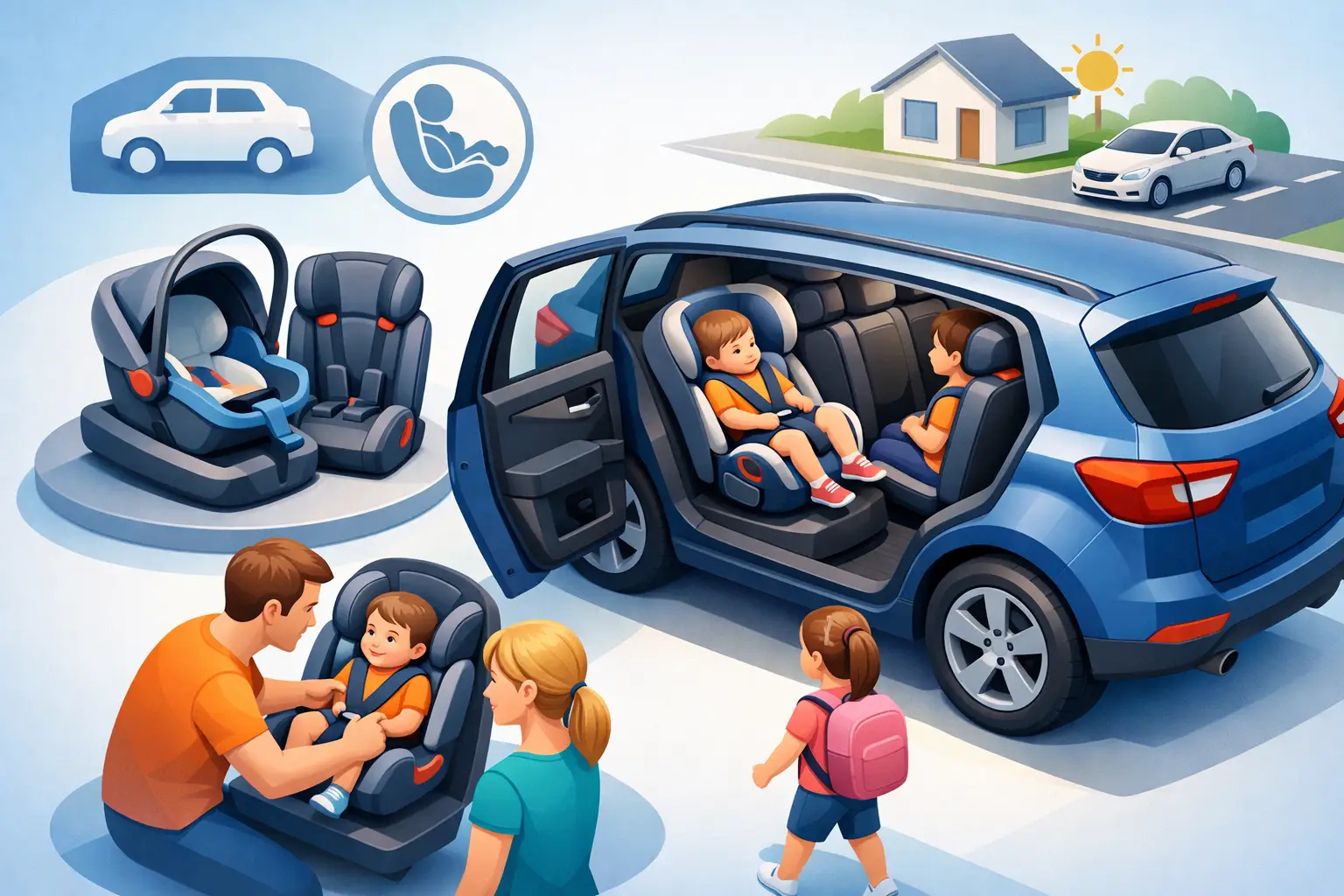
Anyone who has travelled with a baby capsule, a tired toddler and a flight time creeping closer knows the real challenge is not the drive – it is everything around it. The reason many parents ask how family transport with child restraints works is simple: they want a service that is safe, organised and already prepared before the vehicle arrives.
For families, private transport is not just about getting from A to B. It is about knowing the right restraint is fitted, the vehicle suits the number of passengers and bags, and the driver arrives on time with the booking details clear from the start. That is where a professional, pre-booked service stands apart from ad hoc options.
How family transport with child restraints works in practice
In practical terms, family transport with child restraints works by matching the booking to the child’s age or size, the number of passengers, the luggage requirements and the type of journey. Once those details are confirmed, the operator allocates a suitable vehicle and the appropriate restraint or restraints for that trip.
This matters because child restraints are not one-size-fits-all. A family travelling with an infant has different needs from a family with a four-year-old and a booster-age child. Add airport luggage, a pram or extra passengers, and the vehicle choice becomes just as important as the seat itself.
A well-run booking process usually starts with a few key questions. How old is each child? How many child restraints are needed? Is it an airport transfer, school pickup, event transfer or a longer road journey? Will there be a capsule, pram, extra bags or sporting gear? These details help prevent the most common problem in family transport – a vehicle arriving that is technically available, but not actually suitable.
The booking details that matter most
When families book transport with child restraints, accuracy matters more than speed. A rushed booking can create avoidable issues on the day, especially if the restraint type or passenger count is unclear.
The most useful information to provide upfront includes the age of each child, the number of adults travelling, pickup and drop-off times, and whether luggage needs extra space. If there are special circumstances, such as a supervised school pickup or a multi-stop trip, those should be clearly arranged in advance.
This is one of the biggest differences between a professional chauffeur-style service and a last-minute ride request. Pre-booked family transport is built around planning. That planning is what helps the journey run smoothly.
Matching the restraint to the child
Not every child uses the same restraint, and parents are right to be careful about this. Depending on age and stage, a family may need a rear-facing seat, forward-facing seat or booster seat. The transport provider needs enough notice to prepare the correct setup.
There can also be practical limits. For example, fitting multiple child restraints across one row may depend on the width of the vehicle and the size of the seats. That does not mean the trip cannot be done, but it may mean a larger vehicle is the safer and more comfortable choice.
Matching the vehicle to the journey
A standard sedan may suit one adult and one child for a short trip, but it may not be the right option for two adults, two children in restraints, a pram and airport luggage. In that case, a people mover, maxi cab or larger vehicle may be more appropriate.
The right vehicle does more than create comfort. It allows proper passenger positioning, safer luggage storage and easier entry and exit, especially when children are sleepy, unsettled or travelling at awkward hours.
Why pre-booking makes family travel easier
Parents are often not looking for luxury for its own sake. They are looking for fewer unknowns. Pre-booking helps remove several pressure points at once.
First, it gives the operator time to prepare the correct restraints and vehicle. Second, it gives the family a clear pickup plan. Third, it reduces the chance of delays caused by a driver arriving unaware of the child seating requirements.
This becomes especially valuable for airport transfers, early morning departures and late-night arrivals. After a long flight, most families do not want to install their own seat on the kerb or negotiate whether a vehicle can take both the pram and the bags. They want to get in, settle the children and head home.
Safety is more than having a child seat on board
A common misunderstanding is that child-friendly transport simply means a seat is available. In reality, safety depends on the whole service setup – booking accuracy, suitable vehicle allocation, correct restraint provision and a driver who understands the importance of a properly prepared family trip.
It also depends on realistic expectations. If a family has three young children, a double pram and several suitcases, squeezing everything into the smallest vehicle to save a little on cost can make the trip less practical and more stressful. In many cases, choosing a larger vehicle from the outset is the better decision.
There is also a difference between legal compliance and genuine comfort. A trip may be legally possible in a tighter setup, but not ideal for a 45-minute airport run in traffic. Families usually feel that difference straight away.
How airport transfers with child restraints usually work
Airport travel is one of the most common reasons families seek pre-arranged transport. It is also where planning pays off most clearly.
For a departure, the service is scheduled around the flight time, pickup address, passenger count and luggage load. Child restraints are arranged in advance so the family can board without last-minute setup. For an arrival, the booking can be coordinated to account for luggage collection, tired children and the practical need for a vehicle that fits everyone comfortably.
If the family is travelling with more gear than usual, such as a portacot or extra holiday bags, that should be mentioned when booking. The same goes for return journeys. Booking both directions together often makes the process easier because the seating requirements are already on record.
School pickups, appointments and everyday family travel
Family transport with restraints is not limited to airport runs. Many families use it for school pickups, medical appointments, family events and day-to-day travel where reliability matters.
In these situations, the key benefit is consistency. A planned service with the right seat and vehicle can be easier than moving restraints between cars or relying on availability at short notice. It can also help when parents are coordinating busy workdays, multiple children or different pickup times.
For supervised pickups, clear handover instructions matter. Names, locations, timing and authorised contacts should all be set out before the trip. That level of detail supports both safety and peace of mind.
What families should ask before booking
If you are arranging transport for children, ask direct questions. Confirm what type of child restraint can be provided, how many restraints the vehicle can accommodate, and what vehicle is recommended for your group size and luggage.
It is also worth asking about timing, especially for airport collections or school pickups, where punctuality is not a bonus – it is the service. A dependable operator should be able to explain the booking process clearly and help you choose a practical option rather than simply the cheapest available car.
That guidance matters because family transport is not always a simple sedan booking. Sometimes the better answer is a people mover. Sometimes it is a larger vehicle to allow the restraints to be positioned properly and the luggage to be stored safely. The best services will tell you that upfront.
The value of a professional service
For families, the real benefit of organised transport is confidence. Confidence that the driver will arrive when expected. Confidence that the vehicle will suit the trip. Confidence that child restraints have been considered before the journey begins, not as an afterthought on the kerb.
That is why many parents choose an established, booking-based operator rather than taking their chances with informal ride options. With a service such as Who’s Driving You, the goal is straightforward: make family travel feel calmer, safer and easier to manage.
When the right restraint, the right vehicle and the right planning all come together, the trip simply feels lighter. And for most parents, that is exactly what good transport should do.


