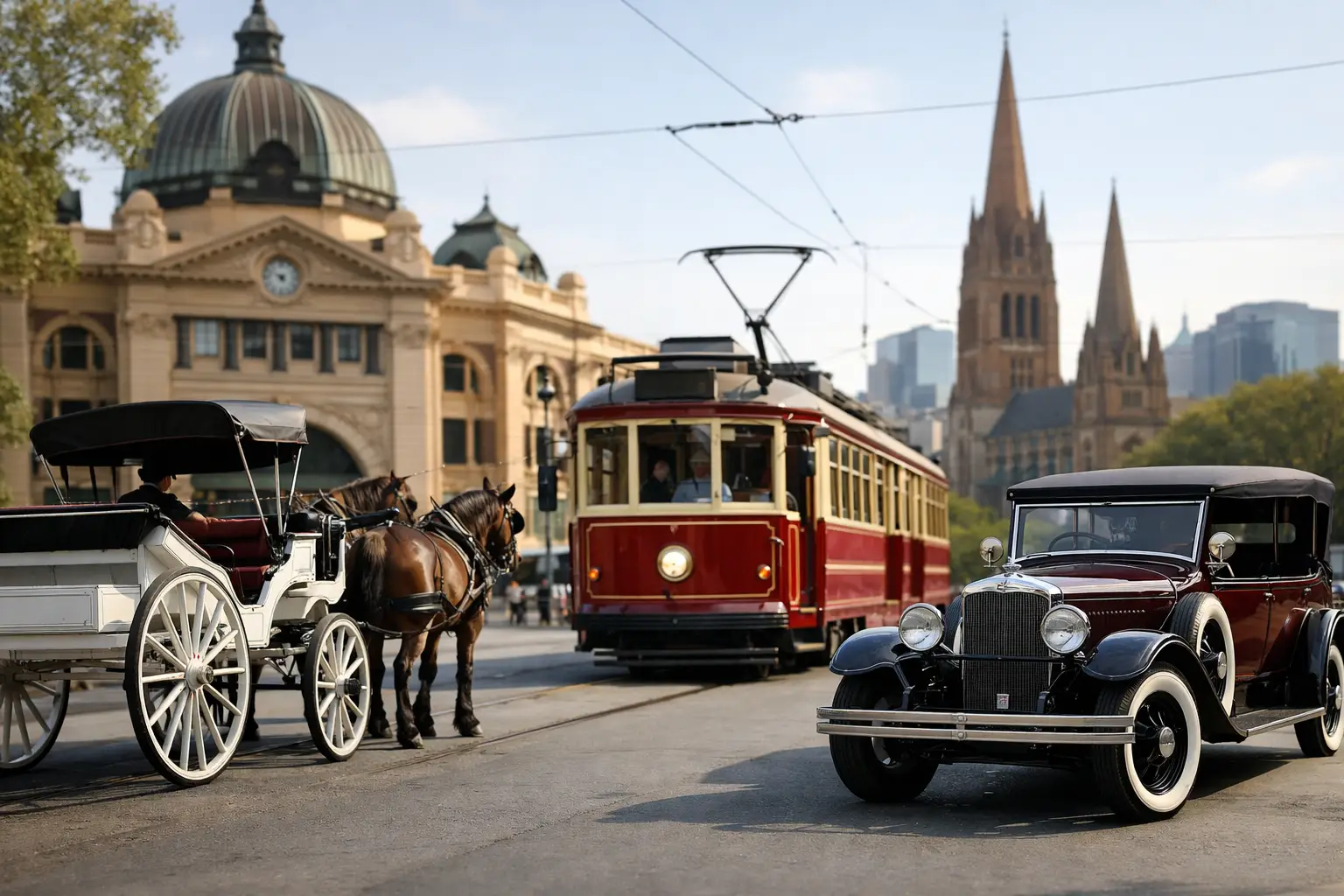
A day in Victoria can move quickly from a Melbourne laneway breakfast to a Yarra Valley cellar door, a Mornington Peninsula lookout or an evening performance in the city. The difference between a relaxed itinerary and a rushed one is often the transport in between. Victorian sightseeing transport gives your group a planned, comfortable way to enjoy the journey without appointing a driver, splitting cars or watching the clock at every stop.
For visitors, families, corporate groups and locals planning a special day out, pre-booked transport brings a useful level of certainty. You know the vehicle has room for your passengers and belongings, the collection point is organised, and everyone can arrive together.
Why planned transport changes a sightseeing day
Victoria rewards unhurried travel. Many of its best experiences sit beyond the CBD, with distances that look simple on a map but take longer once traffic, parking, winding roads and multiple stops are factored in. A chauffeur-driven service keeps the practical details in capable hands, allowing passengers to focus on the view, the conversation and the occasion.
This is particularly valuable on winery days. If your itinerary includes tastings, no one needs to miss out because they are responsible for driving. It also helps on coastal trips, where popular car parks can be busy, and for city sightseeing, where navigating unfamiliar streets and finding suitable loading zones can interrupt the day.
There is a difference between hiring a vehicle and organising a proper transport plan. A good booking considers pickup times, passenger numbers, luggage or prams, access at each venue, and the realistic pace of the day. That preparation matters when you have a flight to meet afterwards, a restaurant reservation, children travelling with you or a group that needs to stay together.
Choosing Victorian sightseeing transport for your group
The right vehicle depends less on the distance travelled than on who is travelling and how the day will unfold. A couple heading to the Mornington Peninsula has different needs from a multi-generational family group visiting Healesville Sanctuary, or a corporate team attending several regional venues.
Executive cars for private days and business guests
An executive car suits one to three passengers looking for a quiet, polished way to travel. It is a practical choice for interstate visitors, business guests with limited time, couples celebrating an occasion, or anyone who values personal space between stops. It can also work well for airport collection followed by a tailored afternoon around Melbourne or a nearby wine region.
The trade-off is capacity. Executive cars are ideal for a smaller party, but they are not the answer when you have several passengers, bulky luggage, golf bags or a pram. Choosing too small a vehicle can make an otherwise enjoyable day feel cramped.
People movers and maxi cabs for families and small groups
People movers and maxi cabs are often the most flexible option for families and groups who want to travel together without booking a large coach. They allow space for passengers and day-trip essentials while keeping the experience straightforward and comfortable.
Families should discuss child restraints when making their booking. The right arrangement depends on each child’s age and size, as well as the number of adults and children travelling. Confirming this early helps ensure the vehicle is suitable from the first pickup, rather than trying to solve seating arrangements on the kerb.
Minibuses and coaches for larger parties
For wedding guests, school holiday excursions, conference groups, social clubs and extended families, a minibus or coach can simplify the whole day. Everyone leaves together, arrives together and has a clear return plan. That matters when venues are spread across a region or when guests are unfamiliar with the area.
A larger vehicle can be more economical and far easier to coordinate than several separate cars. It also gives the organiser one point of contact instead of a stream of messages about parking, late arrivals and directions. The key is to provide an accurate passenger count and advise whether mobility support, luggage storage or additional collection points are needed.
Build an itinerary with breathing room
The strongest sightseeing itineraries are not the ones with the most pins on a map. They are the ones that allow enough time to enjoy each stop. A winery tasting can run over, a café may have a queue, and a coastal walk may be too appealing to cut short. Allowing for these moments makes the day more enjoyable.
Start with the non-negotiables: timed tours, lunch bookings, ticketed events and airport departures. Then build travel time around them. A professional driver can work to a planned schedule, but the schedule needs to reflect real conditions rather than ideal conditions. Peak-hour travel out of Melbourne, public holiday traffic and regional events can all affect journey times.
It is sensible to group stops by area. A Yarra Valley day is usually more comfortable when cellar doors, lunch and scenic stops are selected within a sensible radius. The same thinking applies to the Great Ocean Road, Mornington Peninsula, Bellarine Peninsula and Dandenong Ranges. Trying to cover too much ground can turn a day of sightseeing into a day spent on the road.
Plan for pickups, drop-offs and return travel
Clear pickup details prevent avoidable delays. Provide the full address, hotel entrance or agreed meeting point, especially in busy central Melbourne locations where multiple entrances can cause confusion. If the group is collecting people from different suburbs, allow enough time for each stop and be realistic about how long it takes passengers to board.
Return arrangements deserve the same attention. An evening finish at a concert, sporting event or restaurant can bring heavy demand for transport. A pre-arranged collection gives passengers confidence that they will not be left trying to coordinate rides at the end of a long day.
Sightseeing options worth planning around
Victoria offers enough variety to suit almost any group. The best transport approach changes with the destination, the season and your passengers’ interests.
A winery itinerary may call for a relaxed late-morning departure, several tastings and a long lunch. A Great Ocean Road experience may need an early start, warm layers, photo stops and a decision about how far along the coast you wish to travel. A city itinerary can combine galleries, sporting venues, markets, river precincts and dining, but it benefits from careful drop-off planning in busy areas.
For families, build in shorter travel legs, accessible facilities and time for children to move around between stops. For corporate guests, a clean vehicle, punctual collection and a schedule that supports conversation or quiet work can be just as important as the destination. For groups celebrating a birthday, hens day or reunion, the ability to travel together is often what makes the occasion feel organised rather than fragmented.
What to confirm before you book
A few details shared at the beginning can make the service far more suitable. Confirm passenger numbers, collection and final drop-off locations, the intended route, any fixed booking times, and whether luggage or equipment will be carried. If your plans include wineries, advise the expected finish time rather than assuming a standard day will suit.
It is also worth mentioning mobility needs, child restraints, multiple pickups and any passengers arriving on flights. These are not minor details. They affect vehicle selection, timing and how comfortably everyone travels. A reliable provider will use this information to recommend an appropriate option rather than simply sending the nearest available vehicle.
Who’s Driving You provides chauffeur-driven transport across Melbourne and Victoria, with vehicle options ranging from executive cars and people movers to minibuses and coaches. For sightseeing, the value is in matching the vehicle and schedule to the people travelling, not forcing every journey into the same format.
Comfort, safety and flexibility on the road
Sightseeing should not require passengers to compromise on comfort. Clean, well-maintained vehicles, courteous drivers and enough room to sit comfortably become more significant on a full-day charter than on a short transfer. They help guests arrive at each stop ready to enjoy it.
Flexibility also needs sensible boundaries. Small adjustments on the day may be possible, but a major change of region or a significantly extended itinerary can affect timing and vehicle availability. The best approach is to outline your preferred stops in advance, identify one or two optional additions, and keep the day realistic. That leaves room for a spontaneous lookout or extra coffee without putting the return journey at risk.
Whether the plan is a relaxed regional lunch, a packed day of Melbourne attractions or a coach outing for a larger group, organised transport gives the day a calmer rhythm. Choose a vehicle that suits the passengers, allow time for the places you actually want to enjoy, and let everyone look out the window for a change.


